
If you have a missing tooth, your jawbone is already changing. Most people in Rifle, CO don’t realize this until the damage is significant. Understanding why waiting on implants costs more is one of the most important things you can do for your long-term dental health. Dr. Nathan Millerberg at Rifle Valley Family Dentistry sees this pattern regularly — and the earlier you act, the better your outcome.
Why Your Jawbone Starts Shrinking After Tooth Loss
Your teeth do more than help you chew. Their roots stimulate the jawbone every time you bite down. This stimulation tells your body to keep generating bone tissue in that area. When a tooth is gone, that signal stops completely.
Without stimulation, your body begins reabsorbing bone from that site. This process is called bone resorption. It starts within just a few weeks of losing a tooth. Within one year, you can lose up to 25% of bone width in that area.
The longer you wait, the less bone remains. Less bone means implant placement becomes more complex. In many cases, patients need bone grafting before an implant can even be placed. That adds both cost and healing time to your treatment plan.
Warning Signs You May Have Already Waited Too Long in Rifle
Many patients don’t connect their daily discomforts to bone loss. But there are clear signals your body sends when the damage is progressing. Recognizing these warning signs is the first step toward getting the right care.
Watch for these red flags:
- Shifting or tilting teeth — Neighboring teeth drift into the empty space over time
- Difficulty chewing — Uneven bite pressure strains your remaining teeth and jaw
- Sunken facial appearance — Bone loss changes the structure under your cheeks and lips
- Loose teeth near the gap — Adjacent teeth lose support as the bone weakens
- Gum recession in the area — Soft tissue follows bone loss downward
- Jaw pain or soreness — Compensating for the missing tooth stresses your jaw joint
If you recognize more than one of these signs, bone loss is likely already underway. A dental evaluation in Rifle can reveal exactly how much change has occurred. Early action dramatically improves your treatment options.
How Shifting Teeth and Bone Loss Make Everything More Expensive
This is where waiting really costs you. A single missing tooth rarely stays a single problem. When teeth shift, your bite changes. A changed bite creates uneven wear across your remaining teeth.
That wear can lead to cracked teeth, sensitivity, and eventually the need for Crowns Bridges to restore damaged surfaces. What started as one missing tooth becomes a multi-tooth problem. The treatment cost grows significantly with each added complication.
Bone grafting is another added expense that comes with waiting. If your bone has deteriorated too much, Dr. Millerberg must rebuild the site before placing an implant. This extends your treatment timeline by several months. Acting while sufficient bone remains eliminates the need for grafting in most cases.
There are also hidden costs in your quality of life. Difficulty chewing changes what you eat. Poor nutrition affects your overall health. Many patients report avoiding social meals because of embarrassment. These impacts are real, even if they don’t show up on a bill.
What Dental Implants Actually Do for Your Jawbone
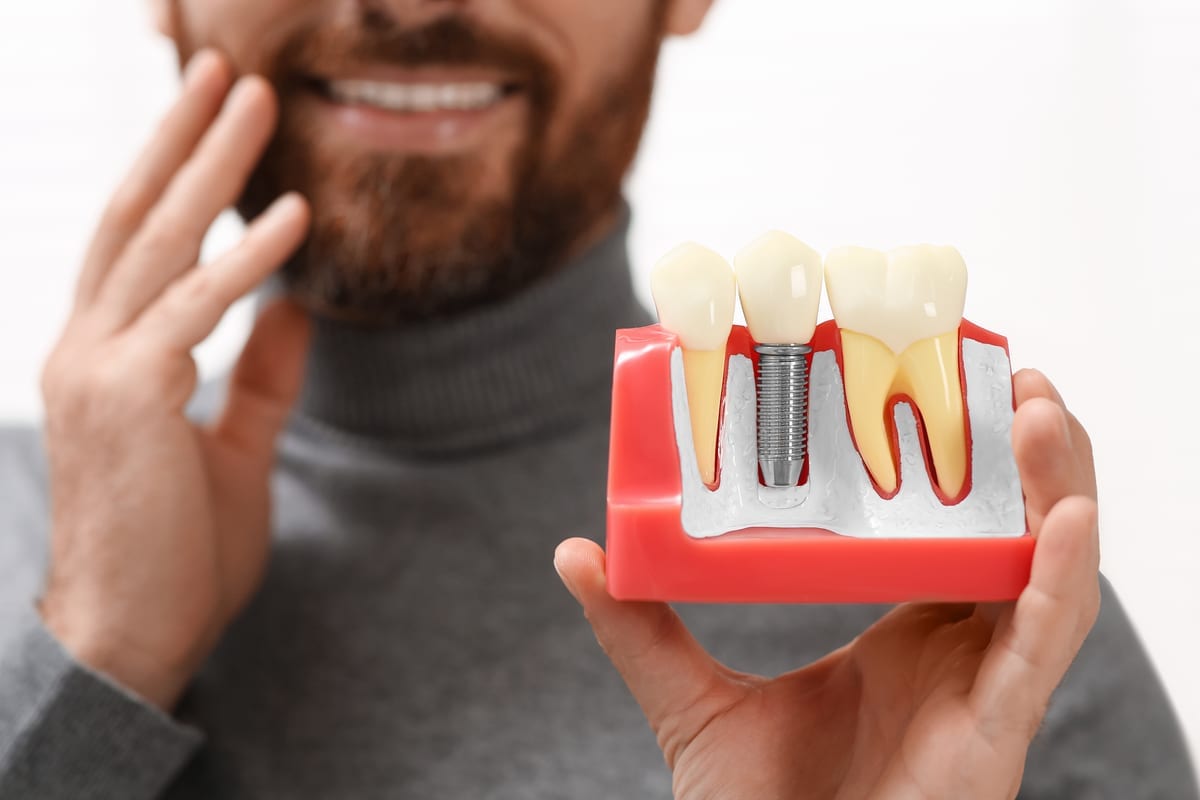
A dental implant is a titanium post placed directly into your jawbone. It acts as an artificial tooth root. Once placed, it restores the stimulation your bone needs to stay healthy. This stops bone resorption in its tracks.
Implants offer several advantages over other tooth replacement options:
- Bone preservation — The implant post stimulates bone just like a natural root
- Stability — Implants don’t shift or slip like removable options
- Natural feel — They function like your own teeth when biting and chewing
- Longevity — With proper care, implants can last decades
- Neighboring tooth protection — No adjacent teeth need to be altered for support
Unlike bridges, implants don’t rely on surrounding teeth for support. That means your healthy teeth stay intact. Dental Sealants and other preventive treatments can continue protecting those teeth without interference from the implant restoration.
Dr. Millerberg evaluates each patient individually. He uses current imaging to assess bone density and volume. This allows for a precise, personalized treatment plan that gives you the best possible outcome.
When Is the Right Time to Get an Implant in Rifle, CO?
The short answer is: as soon as possible after tooth loss. Ideally, you want to begin the implant process before significant bone loss occurs. However, it’s never too late to explore your options.
Even patients with moderate bone loss often qualify for implants. Dr. Millerberg will review your bone levels and determine whether grafting is needed. Many cases that seem complex are still very manageable with modern techniques.
Patients who have been wearing dentures for years can also benefit from implant-supported options. Bone loss continues under traditional dentures because there is no root stimulation. Switching to implant-supported restorations can halt that progression.
The key is getting an evaluation before the window for simpler treatment closes. Bone loss is progressive. Every month you wait narrows your options and raises the complexity of your care.
Conclusion: Don’t Let Waiting Make It Harder
Your jawbone is shrinking — and in Rifle, CO, waiting on implants genuinely costs more over time. The bone loss is silent, but the consequences show up in shifting teeth, a changing face, and a growing treatment plan. Dr. Nathan Millerberg at Rifle Valley Family Dentistry is here to help you understand exactly where you stand and what your best path forward looks like. Book Now to schedule your appointment with our team.
Frequently Asked Questions
How fast does jawbone loss happen after losing a tooth?
Bone resorption begins within weeks of tooth loss. In the first year alone, you can lose up to 25% of the bone width at the extraction site. The process continues gradually over time, which is why acting quickly matters so much.
Can I still get an implant if I’ve had a missing tooth for years?
In many cases, yes. Dr. Millerberg will evaluate your current bone levels using imaging. If significant bone loss has occurred, a bone graft may be recommended first. Many patients with long-standing tooth loss still qualify for implants after proper preparation.
Why is a dental implant better than a bridge for preserving bone?
A bridge sits on top of the gumline and does not stimulate the underlying bone. The implant post goes directly into the jawbone, mimicking a natural tooth root. This stimulation is what tells your body to maintain bone density in that area.
Will I need a bone graft before my implant?
Not always. Patients who act soon after tooth loss often have adequate bone for direct implant placement. Those who have waited longer may require bone grafting first. Dr. Millerberg will assess your individual situation and explain all your options clearly.
What does the dental implant process look like at Rifle Valley Family Dentistry?
Dr. Millerberg starts with a thorough evaluation and imaging to assess your bone health. If you qualify, the implant post is surgically placed and given time to integrate with the bone. Once healed, a custom crown is attached on top. The full process typically spans several months but results in a stable, long-lasting restoration.